
By Adrian Baptiste
On Monday morning, while driving along the Maurice Bishop Highway in Grenada, I was tuned into Boom FM. The guest was Dr. Kishorn Shallow, President of Cricket West Indies. It was a routine commute until something he said shifted my attention completely.
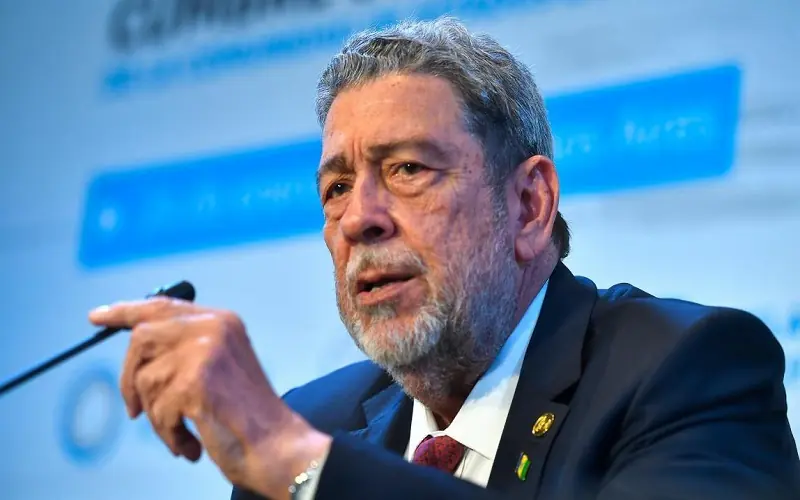
He recalled that during a previous appearance on a regional Caribbean radio program, Prime Minister Ralph Gonsalves said to him, directly, “I won’t call you a little Black boy.”
That statement is deeply problematic.
While on the surface it may appear to be a rejection of a racial slur, the effect is quite the opposite. By choosing to frame his restraint in those exact words, the Prime Minister introduced a racially charged phrase into the conversation. He invoked a term that was both unnecessary and inappropriate in any professional or public setting, especially from a head of government to a respected regional figure.
The issue lies in both content and context. Dr. Shallow is a prominent Caribbean leader. To address him in a manner that even indirectly suggests racial diminishment is unacceptable.
The fact that Prime Minister Gonsalves is a white man leading a predominantly Black nation only complicates matters further. His words, whether intentional or not, echo historical patterns in which race was used to assert control and inferiority. These patterns continue to influence social and political relations in the Caribbean, and introducing a phrase like that into a public forum sends a clear and damaging message.
Saying “I won’t call you a little Black boy” does not demonstrate restraint. It does not absolve the speaker. Instead, it introduces the insult, associates it with the individual, and leaves it hanging in the public domain. It is a rhetorical device designed to assert power while maintaining plausible deniability.
Dr. Shallow said the comment changed how he viewed the Prime Minister. That is a reasonable and measured response. His professionalism throughout the interview only underscored the weight of the moment. The words affected him, and now they have become part of a broader conversation.
That conversation must include a serious examination of how Prime Minister Gonsalves views Black leadership more generally.
If he could say this to Dr. Shallow, what are his private attitudes toward other Black men in leadership roles across the region? What does he think of Prime Minister Dickon Mitchell of Grenada? Prime Minister Roosevelt Skerrit of Dominica? Prime Minister Philip Pierre of Saint Lucia? Or even the Vice Chancellor of the University of the West Indies? These are individuals who, like Dr. Shallow, have risen through competence, hard work, and democratic legitimacy.
And this is not an isolated moment.
Only recently, Prime Minister Gonsalves publicly criticized Timothy Antoine, the Governor of the Eastern Caribbean Central Bank. Governor Antoine, too, is a young, Black, educated, and accomplished Caribbean leader. The tone of the Prime Minister’s remarks revealed more than disagreement. It exposed what appears to be a pattern of contempt for Black excellence.
It is beginning to seem as if Dr. Gonsalves prefers weak Black men. Perhaps those around him are not allowed to operate according to their training, their education, their merit. Perhaps the only way to function within his orbit is to stoop, to submit, to please. And if that is the case, then we must ask what kind of leadership model he believes in. One rooted in fear, flattery, and silence? Or one that lifts up strong, competent Caribbean professionals?
Taken together, these incidents paint a troubling picture. They raise questions not just about race, but about the Prime Minister’s comfort with excellence and independence. At minimum, the comment to Dr. Shallow was inappropriate. At worst, it revealed an attitude that is inconsistent with the values of equality, respect, and regional partnership.
Prime Minister Gonsalves should issue a public apology. Not only to Dr. Shallow and the people of St. Vincent and the Grenadines, but to the entire Caribbean region. His words were heard across borders and they carry implications for how leaders speak to and about each other in the public space.
This is not about rivalry or interpretation. It is about standards. Language matters, especially when it comes from the highest office in a country. And accountability is not optional when harm is caused.
The region is watching. The expectation is clear. We are either building a Caribbean rooted in mutual respect or we are not.
The choice, at this point, belongs to the Prime Minister.
THE Views expressed are not those of Asberth News Network